

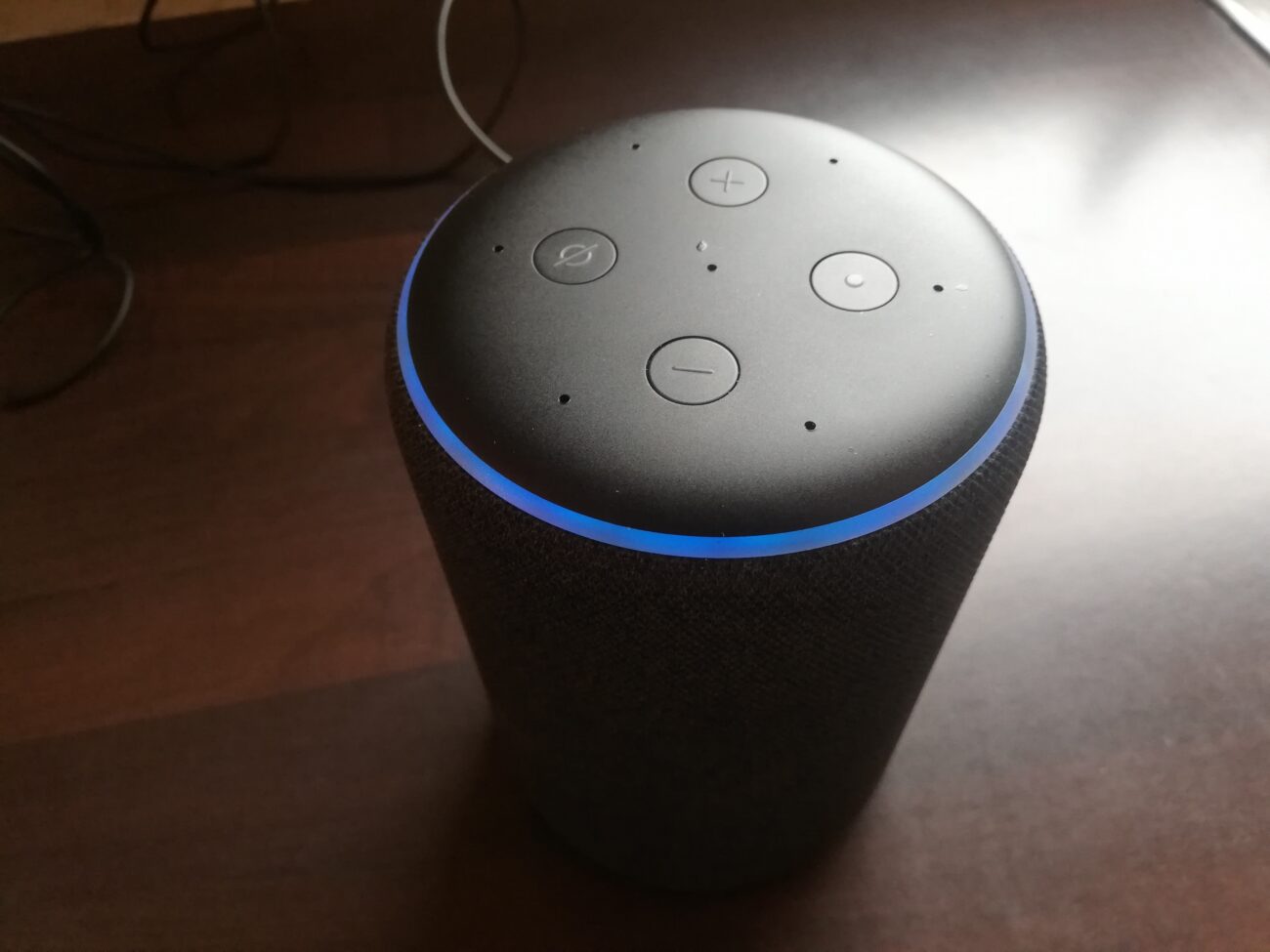
A new software update for household smart speakers has introduced a feature described as a breakthrough in domestic harmony: Respectful Disagreement Mode, a setting that automatically lowers the volume whenever a user begins to sound “too certain” about anything.
The mode is marketed as a tool for “reducing conversational sharp edges” in shared living spaces, particularly kitchens where opinions about bins, dish placement, and the exact definition of ‘soon’ have been known to develop unnecessary momentum. When enabled, the speaker listens for verbal confidence markers and responds by gently fading itself down, as if to imply that the room has heard enough certainty for one evening.
In a demonstration, a tester asked the speaker for the weather. The device answered normally. The tester then added, “and that’s because it’s always like this now,” at which point the speaker reduced its output to the volume of a polite apology and offered a follow-up suggestion: “Have you considered using fewer absolute words?”
The system reportedly detects phrases such as “it’s just obvious,” “everyone knows,” and “I’m not being funny but,” treating them as early warning indicators of a conversation attempting to become a lecture. Once a threshold is reached, the speaker activates what engineers call De-Energy Protocol, which replaces firm statements with soft ambient acknowledgements like “interesting perspective” and “that’s one way to look at it.”
Developers say the algorithm was trained on thousands of real-life household exchanges, specifically the moment when someone begins reciting their opinion as though it were a policy document. Rather than contradicting the user, the device offers a compromise: it will continue speaking, but only in the tone of a person reading the minutes of a meeting they did not attend.
Early users praised the feature for making arguments feel “less final”. One resident said the speaker successfully prevented a row about the thermostat by gradually switching into a whisper and playing a loop of gentle rain sounds whenever anybody attempted to cite “common sense” as a measurable unit.
The update includes optional add-ons. A Nuance Booster inserts small pauses after strong claims, allowing the user to hear their own sentence and decide whether it really needed to be that confident. A premium tier offers an Evidence Reminder button that, when pressed, asks the user to define a key term before continuing, then politely times out if the definition starts with “you know what I mean.”
The company insisted the feature is not censorship, noting that it does not prevent anyone from speaking. “It simply makes certainty less loud,” a spokesperson said. “People remain free to be completely sure about something. They just have to do it at a volume appropriate for a shared hallway.”
A future update is expected to introduce Neighbour Mode, which automatically replaces any rant delivered within earshot of thin walls with a recipe suggestion and a reminder that tomorrow is also a day.
