

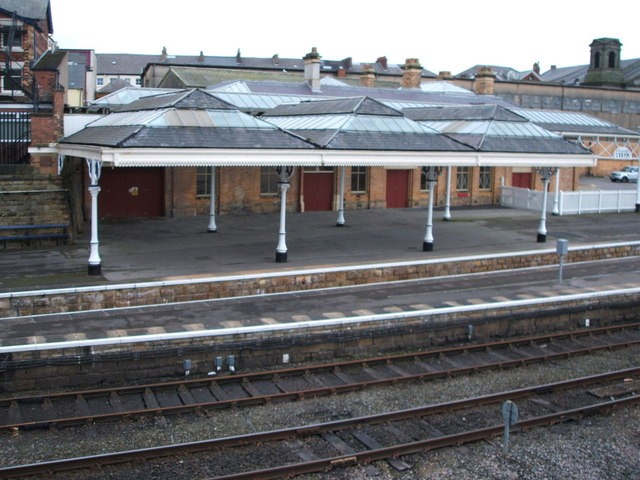
A busy train station has begun testing a new crowd-management initiative designed to ‘reduce hesitation at the barrier’ by rewarding certainty. The scheme, branded Confidence Boarding, uses a small camera above the ticket gates to estimate how sure a passenger looks about where they’re going, then opens the barrier with a cheerful beep if the system senses commitment.
Station staff described the trial as a practical response to the modern commuter’s biggest enemy: standing still while thinking. ‘People arrive with a ticket, a bag, and a vague sense of urgency,’ an internal notice explained. ‘The only missing ingredient is decisiveness.’ Early signage encourages passengers to approach the gate ‘as if they’ve done this before,’ even if they haven’t.
At first, the technology appears straightforward. A green light means the gate accepts your ticket. A red light means it doesn’t. Confidence Boarding adds a third outcome: the affirmation light, where the gate opens anyway, provided the passenger walks forward like a person who absolutely belongs on Platform 4. ‘It’s not about accuracy,’ a staff member said. ‘It’s about flow.’
Commuters report that the system reacts strongly to posture. One passenger said their ticket failed to scan, but the barrier opened after they stared at the departure board with intense focus and nodded once, as if agreeing with it. Another said they were rejected despite having the correct ticket because they paused to check the time, which the camera interpreted as ‘dangerous self-awareness.’
To prevent bias toward naturally confident walkers, the station has introduced a support service called Certainty Coaching. A hi-vis member of staff stands nearby offering quick tips like ‘shoulders back,’ ‘eyes forward,’ and ‘pretend you’re late, even if you’re early.’ The coaching is free, though passengers are advised not to ask follow-up questions, as this can undo the benefits immediately.
Announcements have also been updated. Instead of listing platforms and times, the station now delivers short motivational prompts such as ‘trust your journey’ and ‘you are the timetable.’ The departure board continues to display numbers, but passengers are reassured that the numbers are ‘only a guide’ and that the real train is ‘the one you commit to.’
In one particularly successful demonstration, a group of passengers formed a neat queue for a delayed service. The system detected their collective uncertainty and responded by moving the word ‘DELAYED’ two inches to the right on the board, which engineers said ‘reframed the situation.’ The delay did not change, but several commuters reported feeling slightly more aligned with it.
The station insisted the trial is not intended to replace tickets. ‘Tickets remain important,’ a spokesperson said. ‘But we’ve learned that confidence is also a kind of validation.’ A planned update will allow passengers to earn a small bonus by looking calmly decisive while it rains, on the grounds that nothing says preparedness like accepting dampness without negotiation.
For now, the station has advised travellers to arrive with plenty of time, a charged phone, and the quiet certainty of someone who has never once been surprised by a platform change in their entire life.
