

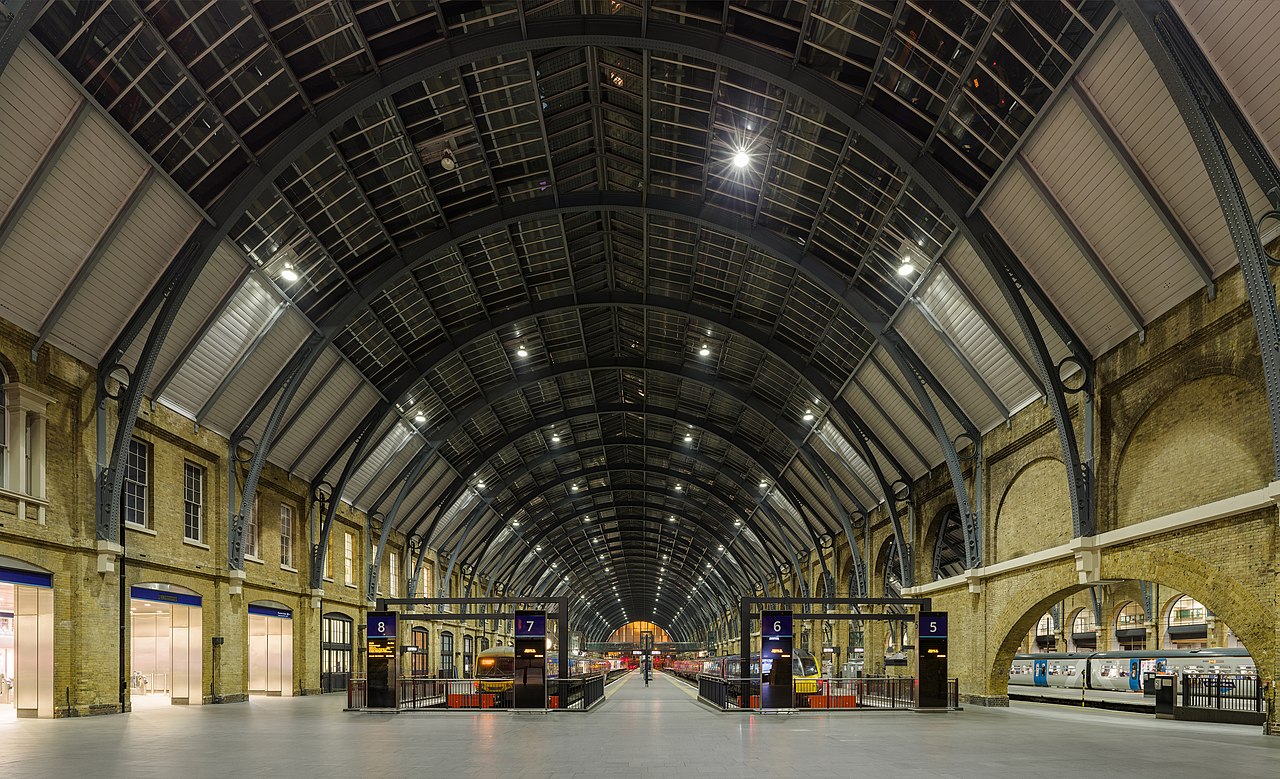
A rail operator has introduced a voluntary pre-journey questionnaire at a number of busier interchange stations, asking passengers to record their relationship with punctuality before collecting their tickets from the machine.
The scheme, described in internal documentation as the Journey Alignment Programme, consists of seven questions and takes approximately two minutes to complete at a dedicated touchscreen kiosk positioned between the self-service ticket machines and the gates. Passengers who complete it receive a small amber indicator printed on their ticket and are encouraged to “approach the departure board with an open posture.”
The questions cover a range of topics, including whether the passenger has “a fixed or flexible relationship with scheduled arrival times,” how they typically process platform changes, and whether they have, in the past six months, described a train as late when it subsequently arrived. A pilot across several stations found that passengers who completed the survey in under ninety seconds were, on average, significantly more satisfied with journeys that ran late than passengers who had not completed it.
Those who record a “flexible” relationship with time are categorised as Journey-Ready and directed toward a boarding lane described on signage as the Contextualised Departure Zone. A spokesperson confirmed the zone does not board any faster, but noted that passengers in it “tend to arrive at the platform with a healthier framework for whatever comes next.”
Passengers who declare a “fixed” relationship with time are offered a single printed sheet titled Understanding Your Journey In A Complex Network, which the operator describes as “forward-facing context” and explicitly distinguishes from an apology on the grounds that it is issued before the train is late rather than after.
An early review of the scheme found that flexible passengers were noticeably less likely to use the word “again” when describing service disruption, a metric the operator described as “directionally positive.”
The programme is expected to be extended to a further eighteen stations in the coming months, with a companion survey planned for the return journey. The operator said it hoped that passengers would, in time, arrive home having already contextualised any part of the trip that had not quite gone to plan, and that this contextualisation would “land more cleanly” when completed in advance rather than on the concourse.
