

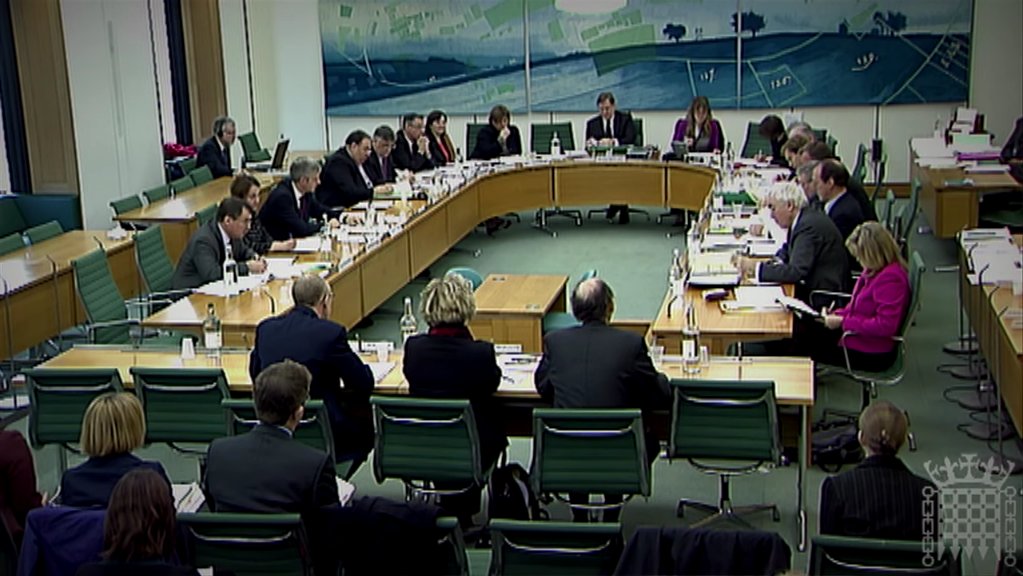
A national television network has introduced a Panellist Position Verification Scheme requiring guests appearing on its flagship debate programme to submit written summaries of their views before and after recording.
The decision follows an internal study which found that 71 per cent of panellists who appeared on the programme over the past year left with positions described as “consistent with or identical to” those filed before the cameras rolled.
A further 22 per cent were assessed as having “clarified” their position — a category the network defines as repeating the same view with greater confidence — while just 4 per cent recorded a measurable change of stance, two of which were subsequently resubmitted as clarifications.
Under the new scheme, panellists receive a Position Statement Form on arrival, which must be completed before entering the studio. At the end of recording, a second form is issued. A trained Position Drift Monitor cross-references both documents and flags any guest who publicly states they have been “moved”, “challenged”, or “given pause” but whose written statements are substantively identical.
Flagged cases are passed to a Consistency Review Panel, which assesses whether any shift in tone was sufficient to constitute a genuine position movement or whether it amounted to what the network’s internal guidance describes as a “rhetorical lean” — a gesture toward reconsideration that does not result in any.
Guests who prefer not to complete either form are asked to sign a Non-Participation Acknowledgement confirming that they attended the debate in a personal capacity and are not claiming to have been influenced by it.
The network said the scheme was introduced to “support the integrity of the format”, noting that viewers had expressed concern about whether the programme’s discussions were producing outcomes beyond the scheduled running time.
Industry observers noted that position verification adds an average of eleven minutes to each recording, during which panellists who have completed both forms sit in a separate green room described on the door as the “Post-Debate Reflection Antechamber”.
A production insider said the antechamber had, in three separate recordings, contained panellists who had not yet completed their pre-debate form, leading to a brief scheduling overlap the network has since addressed by colour-coding the forms.
A spokesperson confirmed the verification process remains voluntary, though the network said it was reviewing whether the Non-Participation Acknowledgement should itself require a supporting statement explaining why the participant felt able to attend without position documentation.
The Position Drift Monitor has so far issued seven flags. Three were issued to the same panellist, who contests all of them on the grounds that his position evolved significantly between the pre-show green room and the car park following broadcast. The Consistency Review Panel noted that the car park falls outside the monitored window but said it would consider expanding the scheme’s scope subject to a separate consultation, which is expected to open in the spring.
